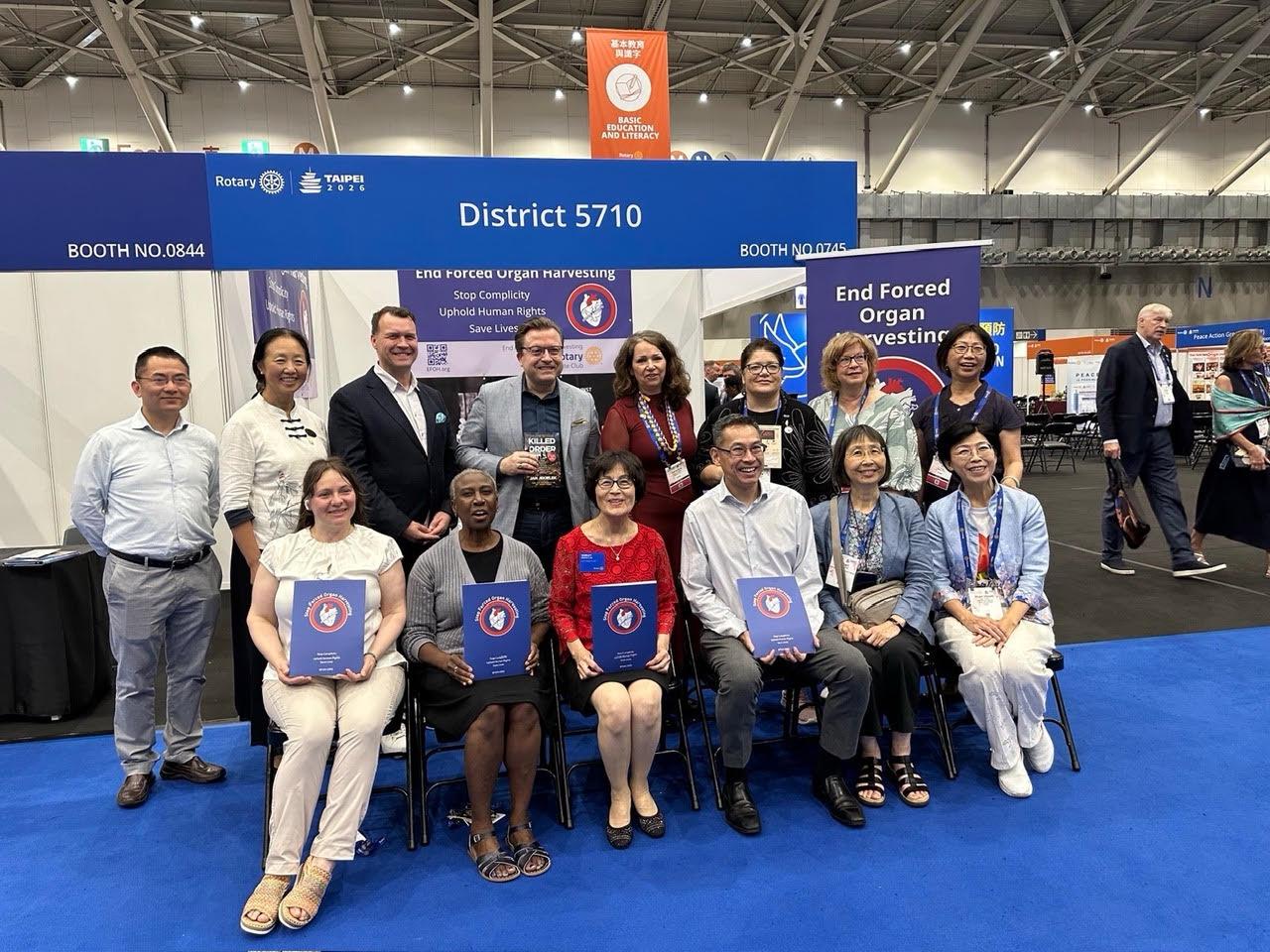
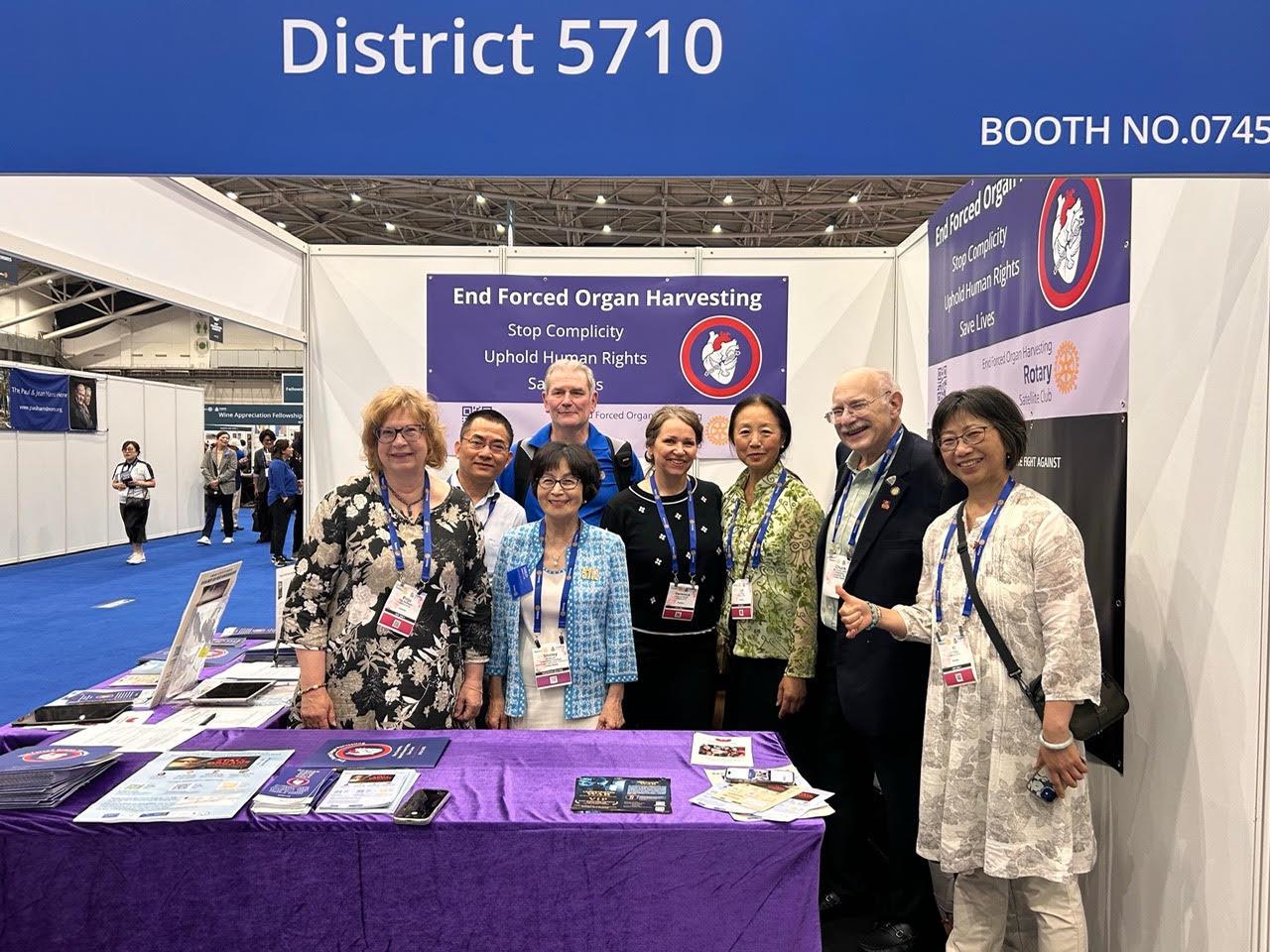
The End Forced Organ Harvesting (EFOH) Rotary Satellite Club recently partnered with Rotary Action Group Against Slavery (RAGAS) to co-host three screenings of State Organs, accompanied by expert panel discussions, during the Rotary International (RI) Convention in Taipei, held June 13–17, 2026.
The RI Convention returned to Taiwan for the first time in 32 years, with Republic of China President Lai Ching-te attending to express his support. During the five-day convention, approximately 37,000 Rotarians from 140 countries gathered in Taipei to promote international exchange and share the impact and experiences of humanitarian and public service projects. 14 EFOH members and their spouses traveled to Taipei and participated in this landmark event.
District 5710’s booth in the House of Friendship drew significant interest from fellow Rotarians. Participants from around the world were deeply moved and motivated to take action against human trafficking and forced organ harvesting—an egregious crime against humanity.
Among the highlights, the Peace Hub featured the Rotary Action Group Against Slavery (RAGAS), an organization dedicated to combating human trafficking through advocacy, education, and prevention efforts, including youth education. RAGAS also addresses the issue of forced organ harvesting—an unethical practice in which organs are removed from living individuals without prior free, voluntary, and informed consent, often resulting in immense suffering and death. EFOH member Dr. Andreas Weber delivered a compelling presentation during the Peacebuilding and Conflict Prevention Hub on the issue of forced organ harvesting, helping raise awareness and inspire action among Rotarians.
“And when it comes to human trafficking, it’s worth noting that people often don’t think it could happen in their own communities. They really don’t believe that forced organ harvesting could happen—but in fact it does. So we want people to raise awareness about this issue,” said Dave McCleary, Global President of RAGAS.
Yvette Scarlett, incoming Chair of the End Forced Organ Harvesting Rotary Satellite Club, added: “We understand the concerns of patients who need organ transplants, but what we care about even more—what we want people to realize—is that if you choose to receive an organ transplant abroad, someone may be killed for that organ. We want people to be informed and to ask questions about the transparency of organ sourcing, ensuring the origin of transplanted organs is fully transparent.”
Momentum is also building in Congress. After the passage of related legislation in the House earlier this year, the Senate Foreign Relations Committee advanced the Falun Gong and Victims of Forced Organ Harvesting Protection Act on June 17, 2026. The legislation aims to disrupt the supply-and-demand chain that enables these abuses. Meanwhile, legislators from both ruling and opposition parties in Taiwan’s Legislative Yuan held a public hearing to advance anti-forced-organ-harvesting legislation. It is encouraging to see countries such as the United States and Taiwan advancing legislation in parallel and calling on the international community to work together to end the atrocity of forced organ harvesting.
To learn more about the EFOH Rotary Satellite Club and its grassroots efforts to raise awareness about forced organ harvesting, please visit EFOH.org.